





Categories
Infertility Insights Women’s Wellness

Common Myths About Menstruation: Facts Every Woman Should Know

Common Myths About Menstruation Debunked
Debunking common menstruation myths with medically accurate facts.

Common Myths About Menstruation: Facts Every Woman Should Know

Many common myths about menstruation still create confusion and shame. As one of the best gynecologists in Panchkula, Dr. Nitasha Gupta believes that menstrual health education is essential for every woman. This guide clears misconceptions with facts backed by WHO, CDC, and ACOG.

Myth 1: Menstruation Is Dirty

Menstruation is not dirty or impure. It is a natural biological process that indicates a healthy reproductive system. Menstrual blood is simply a combination of blood and uterine lining tissue — not harmful or unclean.

Myth 2: Women Should Avoid Physical Activities During Menstruation

Exercise during periods is completely safe. In fact, physical activity can reduce cramps, improve mood, and support hormonal balance. Women should follow their comfort level but avoiding exercise is unnecessary.

Myth 3: Menstrual Blood Is Different from Regular Blood

Some assume menstrual blood is impure or toxic. In reality, menstrual blood contains the same components as normal blood, along with uterine tissue. Medical experts confirm it is not fundamentally different or unhealthy.

Myth 4: PMS Is Just a “Mood Swing”

PMS (Pre-Menstrual Syndrome) is not “just moodiness.” It involves real emotional, hormonal, and physical changes such as fatigue, irritability, bloating, and anxiety. Understanding PMS creates empathy and reduces stigma.

Myth 5: Menstrual Hygiene Products Are Harmful

Pads, tampons, and menstrual cups undergo strict safety testing. When used correctly, they do not harm the body. Choosing menstrual products depends on personal comfort, lifestyle, and hygiene habits.

Useful Internal Links

Conclusion

Breaking menstrual myths helps women make informed decisions about their health. Accurate education encourages better hygiene, confidence, and emotional wellbeing. Understanding menstrual facts is essential for promoting compassion, awareness, and a stigma-free society.

For menstrual health concerns or expert counseling, visit Dr. Nitasha Gupta – Gynecologist & IVF Specialist in Panchkula, trusted across Chandigarh, Mohali, and Dera Bassi.

Frequently Asked Questions (FAQs)

Q1. Is menstruation supposed to be painful?

No. Mild cramps are normal, but severe pain may indicate conditions like endometriosis or PCOS. Consult a gynecologist if pain affects daily life.

Q2. Is it safe to exercise during periods?

Yes. Light to moderate exercise can ease cramps and improve hormonal balance.

Q3. Can stress affect my menstrual cycle?

Yes. High stress can delay or disrupt periods by affecting hormone regulation.

Q4. Are menstrual cups safe?

Yes. When used correctly, menstrual cups are hygienic, eco-friendly, and safe.

Q5. Should irregular periods be a concern?

Irregular cycles may signal thyroid issues, PCOS, or hormonal imbalance. Seek evaluation from a women’s health specialist at Dr. Nitasha Gupta’s clinic.
Categories
Infertility Insights PCOS & Hormonal Disorders

The Difference Between IUI and IVF: A Comprehensive Guide

Choosing between IUI and IVF is one of the most common questions patients ask at our Panchkula and Chandigarh clinics. This short introduction helps Google understand the page better and gives local context for indexing.

IVF vs IUI difference explained by Dr. Nitasha Gupta

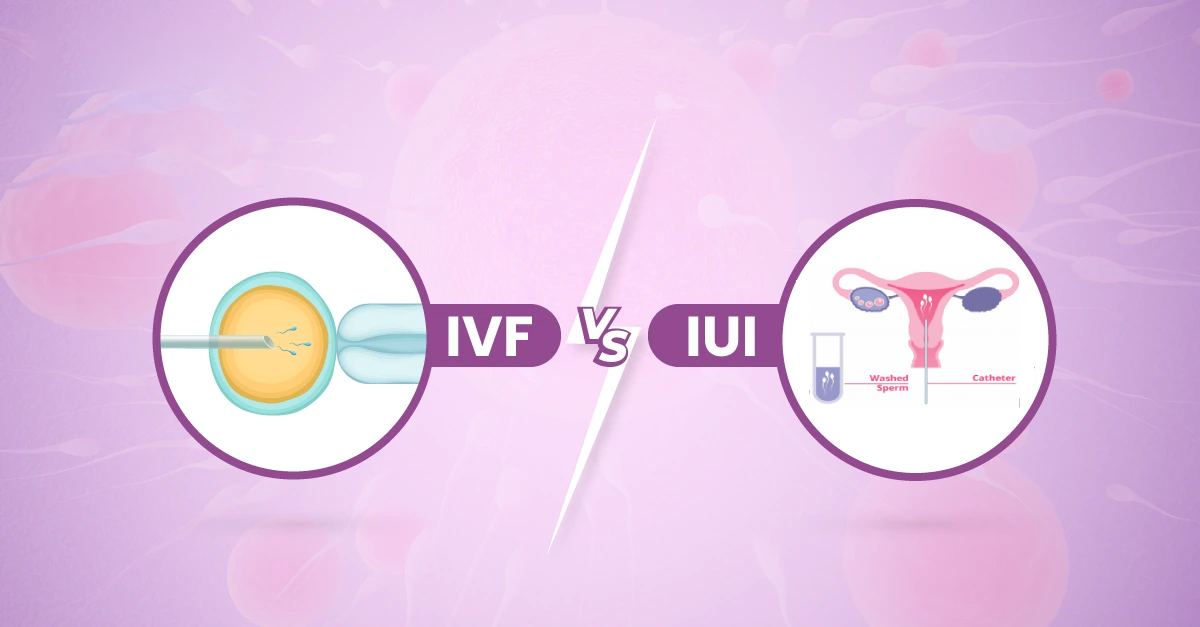
IVF vs IUI: visual comparison of two major fertility treatments.

The Difference Between IUI and IVF: A Complete, Expert-Backed Guide

Infertility affects nearly 15–18% of couples in India (WHO). Because this challenge is becoming more common, many couples try to understand the exact difference between IUI (Intrauterine Insemination) and IVF (In Vitro Fertilization). Although both treatments aim to help with conception, they work in completely different ways and therefore suit different medical conditions.

To simplify this decision, this guide follows the structured approach used by Dr. Nitasha Gupta – Consultant Gynecologist & IVF Specialist. She treats infertility, PCOS, endometriosis, recurrent pregnancy loss, and hormonal issues across Panchkula, Chandigarh, Mohali & Dera Bassi. As a result, this article is clear, medically accurate, and aligned with trusted global standards such as ASRM, CDC, and WHO.

What Is IUI?

IUI is a simple and minimally invasive fertility treatment. During this procedure, healthy, processed sperm is placed directly into the uterus close to the time of ovulation. Because the distance between the sperm and egg becomes shorter, the chances of natural fertilization increase significantly.

For detailed fertility treatments, visit our Fertility Services page.

To book a consultation with our gynecology team, click here:
Contact Dr. Nitasha Gupta.

How IUI Works

1. Sperm Preparation: The andrology lab chooses the healthiest sperm (PubMed reference).

2. Ovulation Monitoring: The doctor tracks ovulation using ultrasound scans, hormone blood tests, ovulation kits, or medications like Letrozole, Clomid, or low-dose gonadotropins.

3. Insemination: A thin catheter inserts sperm directly into the uterus. Because the process is quick and comfortable, most women resume daily activities immediately.

4. Aftercare: A pregnancy test is usually done after 14 days.

When Is IUI Recommended?

  • Mild male infertility
  • Low sperm motility
  • Cervical mucus challenges
  • Unexplained infertility
  • Mild PCOS
  • Donor sperm cycles
  • Couples who prefer beginning with a simpler option

Helpful Internal Links

What Is IVF?

IVF is an advanced fertility treatment in which eggs are retrieved from the ovaries, fertilized in a laboratory, and then healthy embryos are transferred into the uterus. Because IVF bypasses several natural barriers, it offers considerably higher success rates than IUI.

How IVF Works

1. Ovarian Stimulation: Fertility injections stimulate the ovaries to produce multiple mature eggs.

2. Egg Retrieval: A short, painless procedure where eggs are collected using an ultrasound-guided needle.

3. Fertilization Methods:

  • Conventional IVF: Eggs and sperm are cultured together.
  • ICSI: A single sperm is injected directly into an egg, which is especially useful for severe male infertility.

4. Embryo Culture: Embryos grow in the lab for 3–5 days.

5. Embryo Transfer: One or more healthy embryos are placed into the uterus.

6. Pregnancy Support: Hormones help the uterine lining prepare for implantation.

Useful Internal Links for IVF Patients

When Is IVF Recommended?

  • Repeated IUI failures
  • Blocked or severely damaged fallopian tubes
  • Severe male infertility
  • Age above 35
  • Moderate to severe endometriosis
  • Low ovarian reserve
  • PCOS unresponsive to medication
  • Need for PGT-A / PGT-M

Key Differences Between IUI and IVF

1. Procedure Complexity

IUI is simple and quick, whereas IVF includes stimulation, retrieval, lab fertilization, and embryo transfer.

2. Success Rates

IUI: 10–20% per cycle
IVF: 40–70% per cycle depending on age (ASRM)

3. Cost

IUI: ₹7,000–₹10,000 per cycle
IVF: ₹1,00,000–₹2,00,000 per cycle

4. Suitability

IUI works well for mild infertility, whereas IVF is better for moderate to severe conditions.

5. Ovarian Stimulation

IUI usually uses mild stimulation, but IVF requires controlled ovarian hyperstimulation for higher egg yield.

Which Treatment Is Better?

IUI is recommended when:

  • Younger age
  • Mild infertility
  • Open fallopian tubes
  • A budget-friendly start is preferred

IVF is recommended when:

  • Tubes are blocked
  • Male infertility is severe
  • 3–4 IUI cycles have failed
  • Higher success is required quickly

Conclusion

Both IUI and IVF help couples achieve pregnancy; however, they differ in complexity, success rate, and cost. While IUI is affordable and less invasive, IVF offers far higher success rates and becomes essential for complex infertility cases. Because each couple’s fertility journey is unique, choosing the right treatment depends on age, medical history, and reproductive goals.

This comparison is specially prepared for patients seeking IUI and IVF treatment in Panchkula, Chandigarh, Mohali, and nearby areas.

To begin your personalized fertility plan, you can book an appointment with Dr. Nitasha Gupta.

Frequently Asked Questions (FAQs)

Q1. How many IUI cycles should I try before IVF?

Most specialists recommend 3–4 IUI cycles before switching to IVF.

Q2. Is IVF more successful than IUI?

Yes. IVF offers significantly higher success rates per cycle.

Q3. Is IUI painful?

No. IUI feels similar to a routine gynecological examination.

Q4. Who should choose IVF directly?

Couples with blocked tubes, severe male infertility, or low ovarian reserve.

Q5. Does IVF work for unexplained infertility?

Yes. IVF is highly effective because embryo development is closely monitored in the lab.

Latest Blog

Know more about fertility and other fertility problems. We have the solution

FAQ Section

Read all the FAQ's and other general questions if you have.

Emergency Case

If you have an emergency call us or drop us an email, We will get back to you asap.

All Rights Reserved - Dr. Nitasha Gupta © 2025